


We often say, “I meant to do that.” Then the day ends, and the act never happened. That small gap tells us something serious. Intention is not the same as action. If we want conscious habits, we need a way to track both.
Intention tracking is the practice of measuring whether what we meant to do was actually expressed in behavior.
In our experience, this changes the whole tone of self-observation. We stop asking whether we are “good” or “disciplined” and start asking better questions. What triggers the act? What weakens it? What helps it stay alive when the day becomes crowded?
This matters because much of daily life runs on habit. A study using experience sampling from the University of Surrey found that about 65% of daily behaviors begin on autopilot, and about 46% are both habit-driven and still aligned with conscious intention. That is a striking point. Automatic action is not always the enemy. Sometimes it is trained intention made stable.
What we repeat, we become able to miss.
So how do we measure intention without turning life into a cold spreadsheet? We think the best way is simple, repeatable, and reflective. Below are seven methods that help us track conscious habits with honesty.
Why measuring intention changes habit work
Many people track outcomes only. Did we meditate? Did we exercise? Did we pause before reacting? Outcomes matter, yes. But intention lives one step earlier. It appears in the inner movement before the act.
A meta-analysis of 267 studies with more than 100,000 participants showed that intention and habit each predict behavior in their own way. This means we should not treat them as the same thing. A person may strongly intend a behavior and still fail to perform it. Another may act without fresh intention because the pattern is already built.
When we measure intention, we can see whether a habit is conscious, automatic, conflicted, or still fragile.
The seven methods
1. Daily intention log
This is the cleanest starting point. At the start of the day, we write three to five behaviors we intend to perform. They should be concrete. “Stay calm” is vague. “Pause for one breath before answering tense messages” is trackable.
A useful entry includes:
- The behavior itself
- The context or time
- The reason behind it
At night, we mark what happened. Not just yes or no. We also note partial completion. This keeps the method honest and humane.
We once saw how revealing this could be in a simple week of observation. A person wrote “read for 20 minutes after dinner” seven times. The reading happened only twice. Yet the intention appeared every day. The problem was not desire. It was placement.
2. Context cue mapping
Habits do not float in empty space. They attach themselves to cues. Place, time, emotion, social setting, and even posture can trigger action. So we map the cue linked to each intended habit.
For each habit, we ask:
- Where does it begin?
- What happens right before it?
- Which emotion tends to be present?
- Who is usually nearby?
This is useful because repeated behavior grows faster in stable contexts. The large review already mentioned found stronger habit effects when behavior had high repetition opportunity and stable context.

3. Midday awareness prompts
We do not always notice what we are doing while we are doing it. That is why random prompts work well. A phone alarm or timed cue can ask one question: “What am I doing right now, and did I choose it?”
This method echoes the structure used in the Surrey study, where participants were prompted several times per day. We do not need six prompts if that feels heavy. Three can be enough.
Awareness prompts catch behavior in real time, before memory edits the story.
That matters because memory tends to favor intention. We like to think we acted from choice even when we simply followed momentum.
4. Intention-to-action ratio
This method adds one number to the process. We count how many clear intentions were set in a week and how many were completed. If we set 20 and complete 12, our ratio is 60%.
That number is not for judgment. It is for pattern recognition. If the ratio drops every Thursday, something about that day needs attention. If one type of habit stays below 30%, it may be too abstract, too large, or poorly timed.
A three-wave study on exercise with 1,670 university students found a visible intention-behavior gap. Among those who intended to exercise, only about 43.23% followed through, with a gap near 35.48%, according to research on intentions, planning, and habit automaticity in regular exercise. We should not be shocked when intention fails. We should measure the gap and learn from it.
5. Friction and support scoring
Every habit lives between resistance and help. So after each attempt, we score two things from 1 to 5: friction and support.
Friction may include fatigue, noise, confusion, emotional resistance, or poor timing. Support may include a prepared environment, clear reminders, social backing, or inner calm.
This method is especially useful when we say, “I wanted to, but I did not.” Instead of stopping there, we name the forces around the act.
In our view, this is where self-knowledge becomes practical. We stop treating failure as a moral flaw and begin reading the conditions.
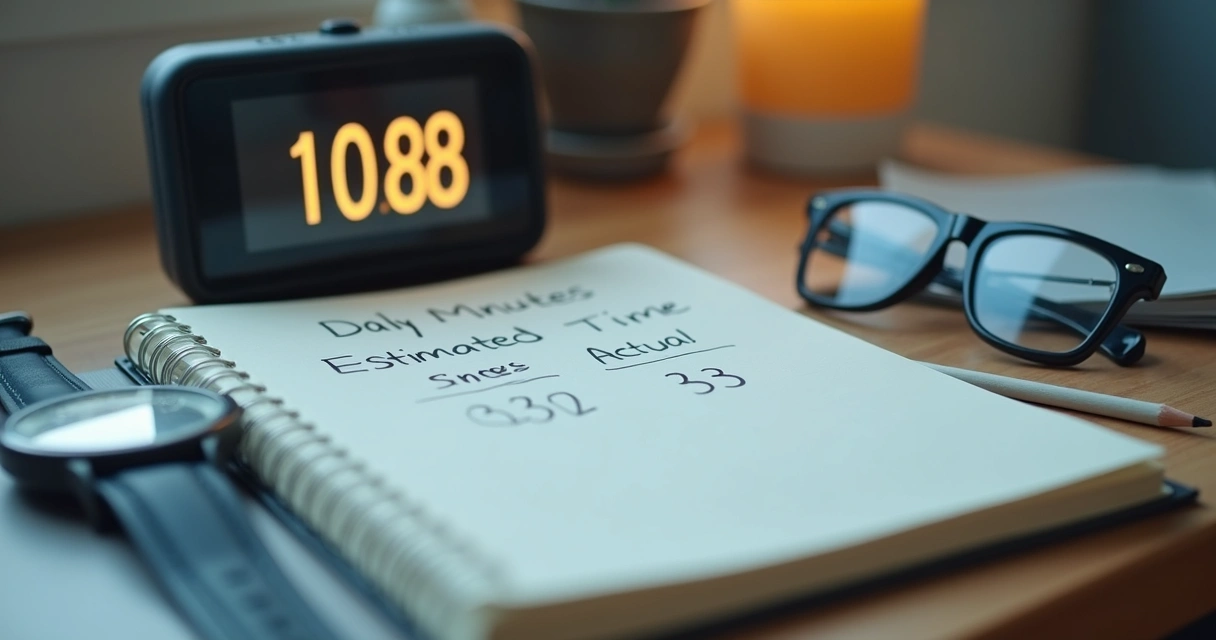
6. Time prediction versus real duration
Some habits fail because we misjudge time. We think a task will take ten minutes. It takes twenty-five. Then the whole day shifts, and intention is pushed aside.
A time-estimation study of 210 students found that only 21% predicted task duration accurately. Many underestimated, and tasks took about 27% longer than predicted on average.
So we track two numbers:
- Predicted duration
- Actual duration
- Emotional cost after completion
Yes, that third one is not time. But it helps. Two tasks may each take 20 minutes, while one leaves us clear and the other drains us. Conscious habit tracking should notice both clock time and lived time.
7. Weekly reflective review
This final method gathers the others. Once a week, we review what happened and ask a few direct questions.
- Which intentions became actions most often?
- Which settings strengthened awareness?
- Where did autopilot help us?
- Where did autopilot work against us?
- What one adjustment should we make next week?
The review should be short. Fifteen minutes is enough. The point is not volume. The point is contact with reality.
We think this is where conscious habits mature. Not in grand promises, but in repeated contact with lived evidence.
Conclusion
Measuring intention is a disciplined form of honesty. It lets us see whether our declared values are entering behavior or remaining only as inner speech. Some habits need stronger cues. Some need better timing. Some need less ambition and more repetition.
Conscious habits grow when intention is observed, adjusted, and practiced until choice becomes stable form.
If we track intention well, we do not become rigid. We become more awake. And that is a different kind of order. Quiet, but real.
Frequently asked questions
What is intention tracking?
Intention tracking is the practice of recording what we mean to do and comparing it with what we actually do. It helps us measure the gap between conscious choice and daily behavior.
How to measure conscious habits?
We can measure conscious habits by logging specific intentions, noting the context, checking completion, scoring friction and support, and reviewing patterns each week. The goal is to track both behavior and awareness.
What are the seven tracking methods?
The seven methods are daily intention logs, context cue mapping, midday awareness prompts, intention-to-action ratio, friction and support scoring, time prediction versus real duration, and weekly reflective review.
Is it worth tracking intentions daily?
Yes. Daily tracking helps us catch patterns early and keeps memory from reshaping the facts. Even a brief daily note can reveal where intention is strong, weak, or misplaced.
Which method is best for beginners?
For beginners, the daily intention log is often the best start. It is simple, clear, and easy to maintain. After that, adding context cue mapping or a weekly review usually brings deeper insight without making the process too heavy.