

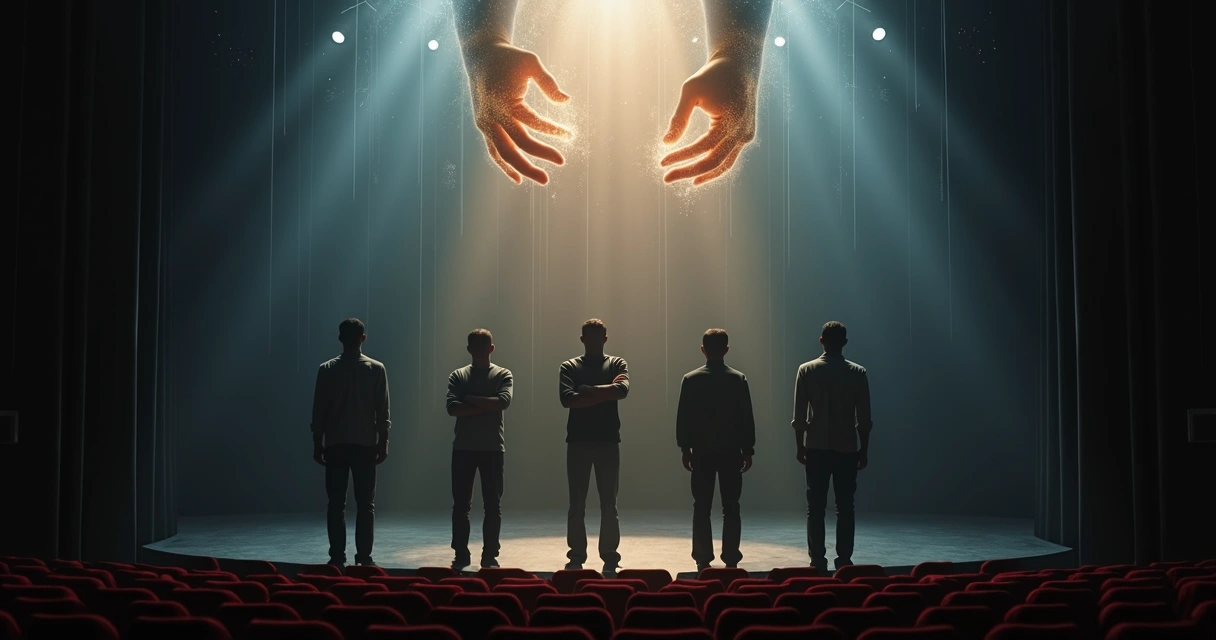
We often think emotion begins when we notice it. In real life, that is rarely true. A sharp reply, a tense jaw, a sudden wave of shame, or a warm feeling of trust can appear before we understand why. The visible emotion is only the final part of a longer inner process.
Unconscious emotional expression is the outward sign of inner forces that start working before clear awareness arrives.
In our experience, people are often surprised by how much of their emotional life is shaped by hidden patterns. A calm conversation can turn cold in seconds. A small delay in a message can feel like rejection. A familiar smell can soften the body before the mind finds a memory. These reactions are not random. They are driven by mechanisms that sit below ordinary attention.
Past emotional imprints
The first driver is stored emotional memory. We do not only remember events. We also retain their tone, body state, and meaning. When a present moment resembles an older one, even in a small way, the old imprint can reactivate.
A person hears a harmless comment at work and feels unusually exposed. Another enters a room and becomes guarded without knowing why. The scene is current, but the nervous system may be answering an older script.
Past emotional imprints make the present feel bigger, sharper, or more threatening than it objectively is.
This is one reason two people can live through the same event and show very different emotional responses.
Conditioned body responses
The body learns through repetition. If tension, fear, embarrassment, or relief happened many times in a given setting, the body can begin reacting before thought forms a sentence. This is conditioning, and it is powerful because it is fast.
Research on subliminal negative affect in healthy samples found that many contrasts showed stronger physiological activation than neutral exposure, especially in fear-conditioning and priming settings. That tells us something plain and human. The body can shift even when conscious recognition is weak or absent.
The body often speaks first.
We have seen this in simple moments. A phone rings, shoulders rise. A certain hallway brings a tight chest. No one chooses it in that instant. The system has already linked cue and response.
Unmet attachment needs
Many emotional expressions are shaped by hidden needs for safety, approval, closeness, and reliability. When these needs were inconsistently met, people may become extra sensitive to distance, silence, tone, or ambiguity.
This can show up in several ways:
Seeking reassurance again and again
Withdrawing before possible rejection
Reading neutral signals as personal disapproval
Turning disappointment into anger because anger feels safer
What appears to be overreaction is often a protective move around belonging. We think this matters because many conflicts are not really about the visible topic. They are about the hidden question beneath it: Am I safe with you right now?

Internalized rules from early environments
We all absorb emotional rules. Some homes teach that sadness is weakness. Others allow care but punish anger. Some reward silence. Others reward performance. Over time, these rules become automatic filters.
Then something subtle happens. The person does not just feel emotion. The person also edits emotion. One feeling gets hidden. Another gets exaggerated. This is how unconscious expression can become distorted.
For example, grief may come out as irritation. Fear may come out as control. Tenderness may come out as distance. We may call that personality, but part of it is learned permission.
Identity protection
People do not only defend against pain. They also defend the image they hold of themselves. If someone sees themselves as strong, kind, independent, rational, or superior, any event that threatens that identity can trigger emotion outside awareness.
We notice this when a person becomes unexpectedly defensive after mild feedback, or dismissive when they feel insecure. The emotion protects coherence. It keeps the self-story intact.
Some emotional reactions do not protect truth. They protect identity.
This driver is hidden because the person often believes they are responding to facts alone. Yet beneath the argument, there may be a fear of being seen differently.
Suppressed conflict and unfinished emotion
Not every emotion finishes when the event ends. Some remain active in the background because they were never processed, named, or expressed in a safe way. This unfinished material can seek release through unrelated moments.
A person who swallowed humiliation last week may snap at a minor inconvenience today. Someone who never admitted envy may feel constant irritation around a friend’s success. The present event becomes a doorway for an older, uncompleted emotional cycle.
We think this is why small triggers can produce strong responses. The visible cause is current, but the emotional charge has been gathering for longer.

State of the nervous system
Fatigue, overload, poor sleep, and chronic stress lower the threshold for emotional expression. In these states, people do not simply feel more. They also regulate less well. A tired mind gives less context. A strained body gives fewer pauses.
This does not mean the emotion is false. It means the system has less room to hold it with balance.
We have all seen it. On one day, a hard comment is manageable. On another day, the same comment feels unbearable. The difference is not always the event. Sometimes it is the condition of the organism receiving it.
How these drivers interact
These seven drivers rarely act alone. They combine. A present remark may touch an old imprint, activate a conditioned body response, threaten identity, and collide with fatigue all at once. That layered effect is why emotional expression can feel sudden and confusing.
It helps to watch for patterns such as:
Repeated emotional intensity in similar situations
Body reactions that appear before thought
Disproportionate responses to small cues
Defensiveness around very specific themes
Feelings that seem misdirected or delayed
When we notice these patterns, we stop treating emotion as a mystery or a flaw. We start reading it as information.
Conclusion
Unconscious emotional expression is not random noise. It is patterned communication from memory, conditioning, attachment, identity, and the body’s current state. When these hidden drivers remain unseen, people may judge themselves too quickly or misread others with equal speed.
But awareness changes the quality of response. When we pause and ask what is moving underneath the visible feeling, our reactions become more intelligible. We gain space. Sometimes only a little. Still, that little space can change a conversation, a decision, or even a life direction.
What is hidden still acts.
We think emotional maturity begins there, not with the removal of feeling, but with a deeper reading of what feeling is trying to show.
Frequently asked questions
What are unconscious emotional expression drivers?
They are hidden factors that shape how emotion appears before we fully understand it. These drivers can include old memories, learned body reactions, unmet attachment needs, identity threats, suppressed conflict, inherited emotional rules, and nervous system strain.
How do hidden drivers affect emotions?
They change the speed, intensity, and form of emotional response. A small present event can feel much larger when it activates older material. This is why someone may react strongly even when the surface situation seems minor.
Can I control unconscious emotional expression?
You may not control the first impulse, but you can learn to influence what happens next.
With practice, people can notice body signals earlier, name patterns, and create space before acting. The goal is not perfect control. It is greater awareness and better response.
Why are emotional drivers often hidden?
They are often hidden because they were formed early, repeated often, or stored in body-based learning rather than clear verbal memory. Many of them operate automatically, so we notice the emotional result before we notice the cause.
How to recognize my own emotional drivers?
Start by observing repeated triggers, body sensations, and themes that lead to strong reactions. It helps to ask what the moment reminds you of, what need feels threatened, and whether your response matches the present situation. Journaling, reflection, and careful dialogue can make these patterns easier to see.