

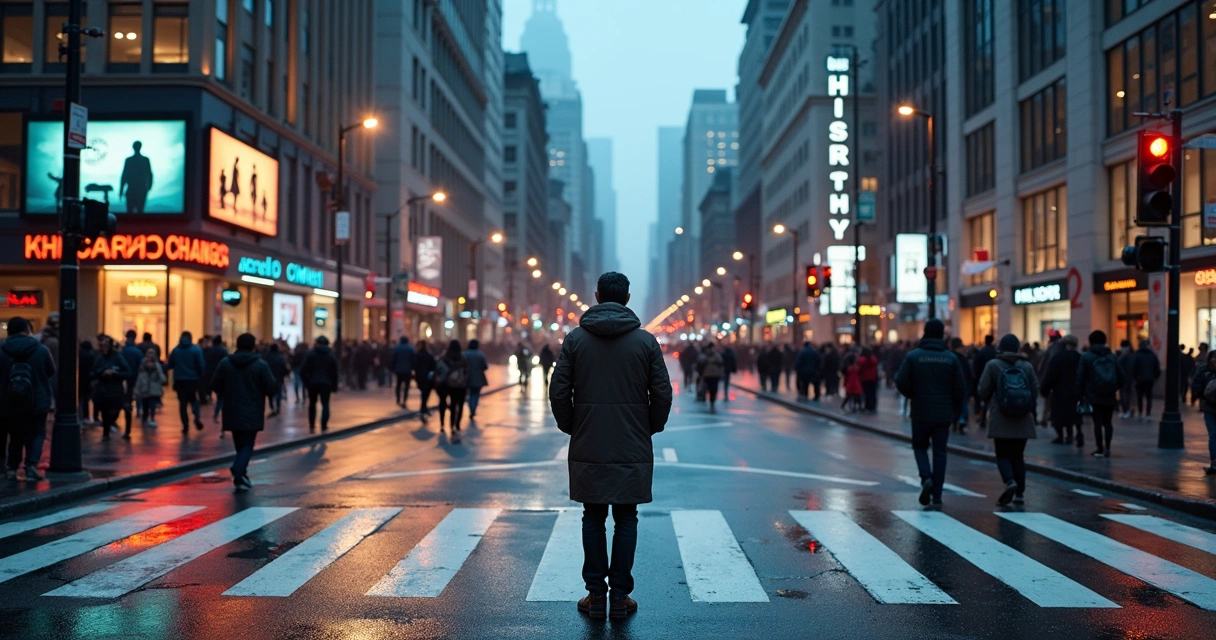
We rarely change our values in one clear moment. Most of the time, the shift happens quietly. A public crisis begins. A new social norm spreads. Trust moves from one institution to another. We adjust our speech, habits, and judgments. Then one day we notice that what once felt nonnegotiable now feels optional.
Unconscious value shifts happen when our priorities change before our self-image catches up.
We see this often during periods of fast social change. A pandemic, economic strain, political tension, digital saturation, and cultural conflict do not only change opinions. They reshape what people reward, fear, excuse, and seek. That is the deeper level. And it is often harder to notice because it hides inside normal adaptation.
In our experience, people do not usually say, “My values are changing.” They say something else. They say they feel more tired, less patient, more guarded, less trusting, more selective, more driven by safety, or more drawn to personal freedom. These are not random moods. They can be signs of a moral and emotional reordering.
Why value shifts often stay hidden
We tend to think of values as stable. We link them to identity, family, faith, education, and life story. That makes us assume they move slowly. Sometimes they do. But the expression of values can change fast when the environment pressures us in repeated ways.
A simple example helps. We may say we value openness. Yet after months of public conflict, misinformation fears, and broken trust, we start rewarding caution over openness. We become slower to share, slower to believe, slower to welcome difference. We still use the old language about ourselves. But our operating values have shifted.
Behavior often changes before belief admits it.
This matters because unconscious shifts can create inner friction. We feel unlike ourselves, but we cannot name why. Or we judge others harshly without seeing that our own standards were recently rewritten by pressure.
A broad cross-national study of values and religious beliefs found long-term movement between traditional and secular-rational orientations, and between survival and self-expression values, linked to modernization trends. That kind of data shows something very human. Social conditions do not just affect institutions. They alter the value atmosphere in which identity forms.
What social change does to our inner priorities
When society changes fast, several inner movements can happen at once. We may become more protective in one area and more permissive in another. We may demand stability while also wanting reinvention. This is why value tracking needs nuance. It is not a clean line.
During the COVID period, for instance, public language itself reflected shifting value emphasis. A longitudinal study across six countries on values in news coverage found that references to health and safety in U.S. media rose above 60% in early 2020, while socio-economic equality climbed sharply and hedonism later increased as well. We can read this not just as media content, but as a mirror of changing collective attention. First, survival. Then fairness. Then relief and pleasure.
We have all seen versions of this pattern in everyday life. In one phase, people accept limits they would once reject. In another, they seek comfort with unusual intensity. In a later phase, they become suspicious of shared rules and return to personal preference. The stated reasons vary. The value movement underneath is often similar.
Threat tends to raise the value of safety.
Disruption often raises the value of fairness and access.
Exhaustion can raise the value of pleasure and escape.
Repeated confusion may raise the value of certainty.
These shifts are not automatically good or bad. They are signals. What matters is whether we become conscious of them.
How we can notice a shift in real time
Tracking unconscious value change does not begin with a grand theory. It begins with small observation. We look for repeated choices, not isolated statements. We compare what we praise today with what we praised two years ago. We notice where our emotional energy goes first.
The clearest signs of a value shift appear in repeated attention, repeated fear, and repeated justification.
We can ask ourselves practical questions:
What do we now protect more quickly than before?
What kind of behavior do we excuse today that we once questioned?
What do we admire more now: caution, freedom, loyalty, comfort, status, honesty, or peace?
Which losses feel unbearable now, even if they seemed minor in the past?
Sometimes the answers surprise us. A person who once valued broad dialogue may now value emotional safety over debate. A person who once valued duty above all may now value rest and private life. A family that once valued social participation may now value withdrawal and controlled circles.
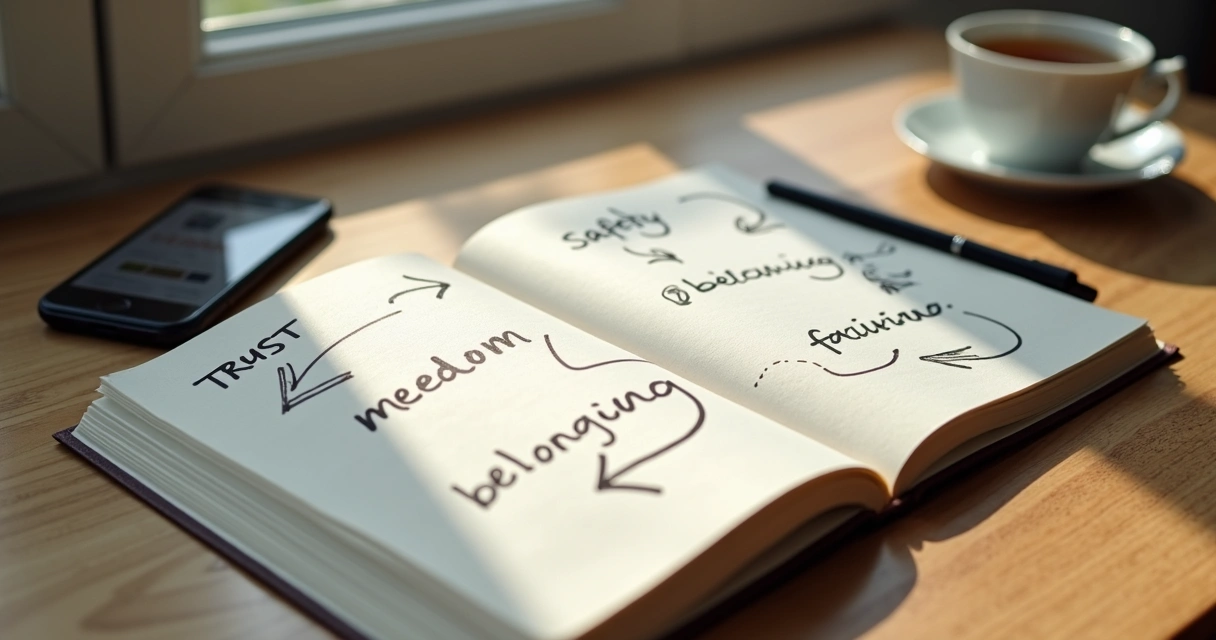
Short notes help. So does honest memory. We think many people benefit from keeping a “value log” for a month. Not a diary of events, but a record of reactions. What angered us. What comforted us. What kind of message earned our trust. Patterns begin to show.
Trust, belonging, and silent value drift
Large social changes often move through trust. When trust rises or falls, values reorganize around it. If trust in institutions weakens, people may shift toward local bonds, private judgment, or tribal belonging. If trust rises in experts or public systems, people may accept broader coordination and shared rules.
A January 2026 survey on public confidence in scientists reported that 77% of U.S. adults still had at least a fair amount of confidence, but that was down from 87% in April 2020, with a sharp partisan gap. We should not read numbers like these as abstract polling alone. They can reveal shifts in how people assign authority, credibility, and moral trust.
Belonging shifts values too. Religious change offers a clear case. A Pew Research analysis of religious switching from 2010 to 2020 found notable losses among younger adults raised Christian and gains among the religiously unaffiliated. Whether one views that through faith, culture, or identity, the movement suggests changes in meaning, duty, community, and personal moral framing.
Where belonging changes, values rarely stay still.
How to respond without panic
Once we notice a value shift, the goal is not shame. It is clarity. Social pressure affects all of us. The better response is to ask whether the new value pattern is aligned with who we want to become.
We can work with three practices:
Name the shift in plain words.
Ask what fear or hope has been feeding it.
Choose which parts we accept and which parts we want to correct.
This is where maturity begins. Not in pretending we are unchanged, but in seeing change clearly enough to take responsibility for it. Some shifts bring growth. Others shrink the person while feeling reasonable in the moment.
Social change does not only test our values. It also reveals which values we hold only when life is calm.
Conclusion
Tracking unconscious value shifts is a way of protecting inner honesty during unstable times. We cannot stop society from changing, and we should not expect ourselves to remain untouched by it. But we can notice what is happening under the surface. We can see when safety starts ruling every choice, when comfort replaces meaning, when distrust hardens into identity, or when a deeper truth begins to emerge through disruption. If we stay awake to those movements, social change becomes more than pressure. It becomes a mirror.
Frequently asked questions
What is an unconscious value shift?
An unconscious value shift is a change in what we prioritize, reward, or protect without fully noticing it at first. It often shows up in habits, judgments, and emotional reactions before we can clearly describe it.
How does social change affect values?
Social change affects values by changing the conditions in which people live, relate, and make sense of risk. Crisis, cultural conflict, new norms, and shifts in trust can all push people toward safety, freedom, equality, certainty, or belonging in new ways.
How can I track value shifts?
We can track value shifts by watching repeated choices and reactions over time. It helps to write down what we defend, what we fear, what we admire, and what we excuse. Patterns across weeks or months are more useful than one isolated event.
Why are unconscious value shifts important?
They matter because they shape behavior, relationships, and identity even when we do not name them. If we ignore them, we may live by values we never consciously chose. If we notice them, we gain more freedom and coherence.
Can society undo unconscious value shifts?
Yes, some shifts can be softened or reversed when conditions change, trust is rebuilt, and people reflect on what they adopted under pressure. Still, not every shift disappears. Some become part of a new moral pattern for individuals and groups.