

How can we recognize when our worldview is becoming more refined, more mature? We often notice small changes in our attitudes, our questions, or the way we relate to others. Yet, the journey toward what we call epistemic maturity is not always clear. Through our experience and research, we have identified seven signs that show when our perspectives are truly evolving.
What is epistemic maturity?
Epistemic maturity refers to the way our thinking grows more integrated, flexible, and critical over time. It is not a state you reach once and for all, but more like an ongoing process. We have seen, time and again, that people with higher epistemic maturity do not cling rigidly to fixed ideas, but remain open to new information, reconsider their positions, and value different kinds of knowledge.
Epistemic maturity is the art of learning, unlearning, and relearning.
Let us walk through the seven signs that indicate your worldview is evolving.
1. You seek coherence, not just certainty
Most of us begin our intellectual journeys wanting simple answers. As we grow, the need for absolute certainty gives way to a search for internal and external coherence. This means we continually test our beliefs against each other, refining our understanding so everything “fits” more logically and ethically.
When we are less interested in being right, and more interested in being truthful, coherence becomes our anchor.
You might notice yourself asking, “How does this idea fit with the rest of my knowledge?” or “Is there a contradiction here?” These are signs that your mind is working to harmonize information across disciplines, not just inside a single box.
2. You recognize the limits of your own knowledge
As perspectives mature, we accept that there are things we do not know—or may never know. Early on, it can feel uncomfortable to admit ignorance or uncertainty. Over time, though, this humility turns into wisdom.
It is wise to know when we do not know.
Mature thinkers see uncertainty not as weakness, but as an opportunity for further discovery.
We begin to see the boundaries of our own experience and expertise, and become more willing to listen, learn, and adjust our views where needed.
3. You value differences instead of rejecting them
Growing epistemic maturity is marked by a genuine curiosity about perspectives that differ from our own. Where once we might have dismissed or even feared different worldviews, now we listen with care. This deep respect for diversity—philosophical, cultural, methodological—nourishes the soil from which new understanding grows.

The willingness to engage with other points of view is a sign that our minds are not rigid, but living and adaptive.
The mature mind does not just tolerate difference—it welcomes it as a way to grow.
4. You shift from defending answers to refining questions
There was a time when we felt compelled to defend every answer. With epistemic maturity, we shift our energy toward asking better, deeper questions. Instead of worrying whether our answers are perfect, we try to increase the quality of our inquiry.
This is often seen when we say, “I hadn’t thought of it like that. What question should I be asking instead?” or “Which assumptions are invisible to me?”
Better questions open new doors.
In this phase, defense gives way to curiosity—even about our own thinking.
5. You integrate emotion and reason
It is a myth that mature thinking is purely rational. In our experience, those with the greatest epistemic maturity are able to sense the interplay between emotion and reason, rather than seeing them as opposites. Logical consistency is matched by emotional honesty.
This integration makes our conversations richer and our relationships more authentic. We become more aware of how feelings influence decisions and interpretations, allowing for greater empathy and clearer understanding.
True maturity recognizes that reason and emotion shape understanding together.
6. You distinguish between data, interpretation, and belief
With time, we get better at sorting the raw facts from our interpretations and the personal beliefs we layer on top. This ability prevents confusion and reduces conflict.
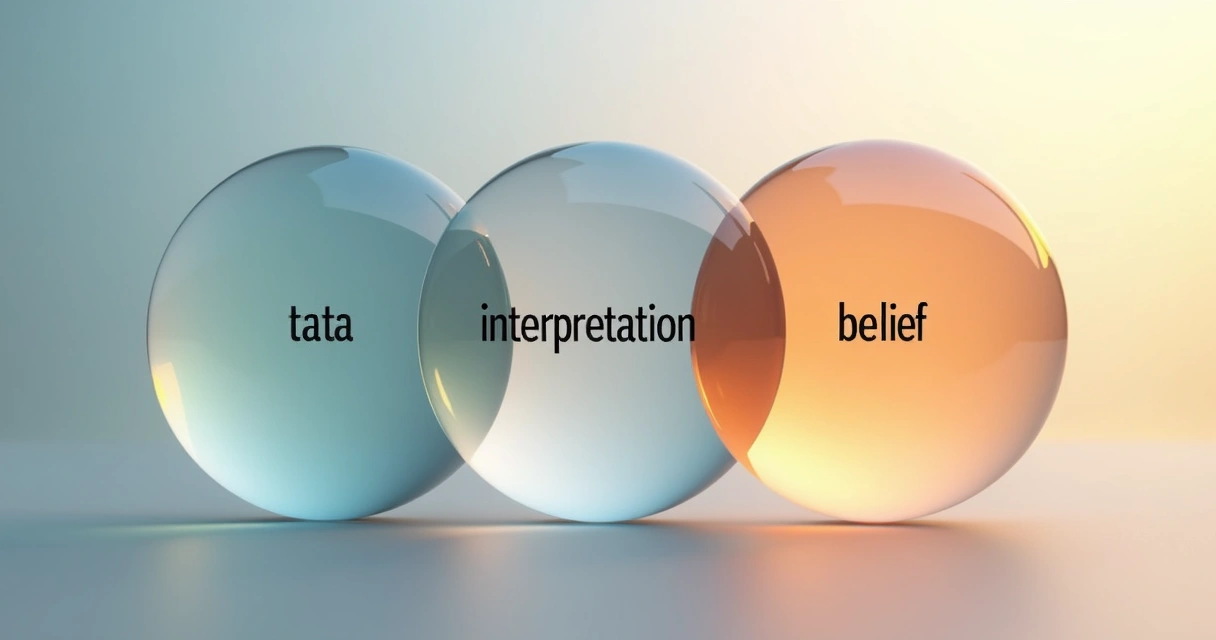
When we distinguish these domains, we no longer mistake what “is” for what “ought” to be, or treat our preferred explanations as absolute truth.
This clarity brings stability to our thinking and helps us communicate more clearly with others.
7. You accept the process of ongoing change
The highest sign of epistemic maturity is not a settled mind, but an open one. Our view of the world is always in motion. Those who are truly mature accept this process—sometimes even welcome it.
Growth does not end; it evolves.
This does not mean we lack convictions, but that we hold them with a gentle grip, ready to adjust in light of honest reflection, new evidence, or lived experience.
The conclusion: Embracing evolution in our worldviews
In our experience, each of these seven signs is both a milestone and an invitation. Epistemic maturity is not about having “arrived” at some perfect system of knowledge, but about being fully alive to reality’s complexity. We cultivate this maturity by seeking coherence not rigidity, by acknowledging what we do not know, by honoring diversity, and by welcoming the process of change itself.
The journey does not end. Every new question, every difficult conversation, every honest admission of uncertainty helps our worldview evolve—and, in turn, shapes a more open, connected, and resilient mind.
Frequently asked questions
What is epistemic maturity?
Epistemic maturity is the ability to think, learn, and grow in a way that values critical reflection, coherence, and openness to new information. It means recognizing our limits, respecting diverse perspectives, and embracing the process of change in our beliefs and understanding.
How do I know my worldview is evolving?
You can recognize the evolution of your worldview by noticing changes such as asking deeper questions, appreciating different viewpoints, acknowledging limits in your knowledge, and valuing ongoing personal growth and learning. These all point to an increasing level of epistemic maturity.
Why is epistemic maturity important?
Epistemic maturity helps us avoid dogmatism, reduce conflict, and make better sense of complexity. It fosters respectful dialogue, clearer thinking, and more adaptive responses to new challenges. This maturity supports both individual and collective well-being.
How can I develop epistemic maturity?
We develop epistemic maturity by staying curious, seeking internal coherence, respecting different opinions, reflecting on our beliefs, distinguishing facts from interpretations, integrating emotion and reason, and being open to changing our views as we grow and learn.
What are the seven signs of epistemic maturity?
The seven signs are: seeking coherence instead of only certainty, recognizing the limits of your knowledge, valuing differences, focusing on better questions, integrating emotion and reason, distinguishing data from interpretation and belief, and accepting the ongoing process of change in your perspective.