


When we think about groups—teams, organizations, committees, or even informal circles—what often brings about their greatest shifts in awareness, behavior, and outcome is not just what they do, but how they communicate with each other and respond to the signals within the group. Feedback systems stand at the center of this process, quietly but powerfully steering the way groups create meaning, adapt, and cohere.
Understanding group consciousness
Group consciousness is more than the sum of individual minds. It describes the shared awareness, norms, and meaning that develop when people participate as a group. This shared consciousness guides decisions, shapes culture, and even impacts the way each member sees themselves and others.
In our research, we have seen this shared mind operate almost like a living organism—self-correcting, learning, and changing in response to input from its members and its environment. But how does a group truly shift its consciousness? A big part of the answer lies in its feedback systems.
What are feedback systems?
A feedback system is a loop that connects the outcomes of actions (or behaviors, decisions, etc.) back to the people making those actions. This loop allows for adjustment, learning, and growth over time. In groups, feedback can flow in different forms—from explicit comments after a meeting, to informal social signals, to structured surveys or performance reviews.
- Positive feedback amplifies or reinforces patterns in the group, encouraging more of a certain behavior or approach.
- Negative feedback helps correct, balance, or steer away from behaviors that may lead to problems.
The interplay between these two feedback types creates a living, ongoing process—a real-time dialogue between past actions and future possibilities.
Feedback is the compass that guides collective awareness.
The anatomy of feedback in groups
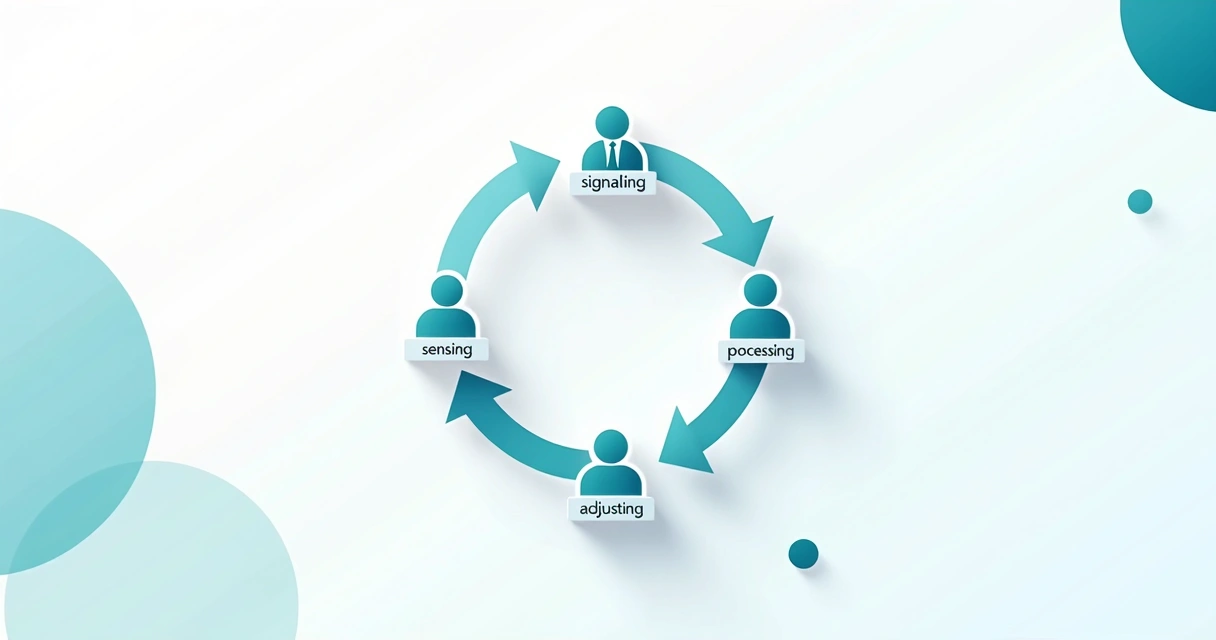
How does feedback actually work inside a group? It starts with how information gets noticed, shared, and responded to. Let’s break down the steps:
- Sensing: Members see or sense what’s happening—both the obvious and the subtle.
- Signaling: Someone communicates their response. This could be words, gestures, silence, or even the mood in the room.
- Processing: The group, consciously or not, absorbs this signal. It shapes opinions, discussions, and next steps.
- Adjusting: New actions are taken. The loop repeats, each cycle bringing the group closer (or sometimes further) from shared understanding or goals.
Sometimes this cycle is quick—a nod or a critical remark can shift the energy of a meeting in seconds. Other times, feedback takes the form of formal reviews, evolving the group’s norms and direction more slowly.

How feedback systems change group consciousness
We have seen again and again how the mechanics of feedback produce surprising shifts in group behavior and even in the group's self-understanding. Here’s how:
Revealing blind spots
Without feedback, blind spots multiply. Groups can stay stuck in limited perspectives. Feedback shines light on the patterns and habits that might otherwise slip by unnoticed. Suddenly, assumptions are questioned, and new possibilities emerge.
Creating psychological safety
A group that practices honest, respectful feedback builds trust. When people know they can share thoughts without fear, they are more likely to contribute creative ideas, challenge the status quo, or admit mistakes. Over time, this safety becomes “felt knowledge”—it shapes the group’s culture and sense of unity.
Building alignment and purpose
Regular feedback keeps everyone in sync. When group members give and receive clear signals, they know what matters—and what needs to change. This aligns group intentions, making collective goals more vivid and shared.
Feedback, when used well, replaces confusion with connection.
Encouraging collective learning
Group consciousness grows through reflection. Every cycle of feedback is a chance to learn—not just what works or doesn’t, but why. Over time, a learning group develops a living “memory” of past experiences, making wiser decisions in the future.
What makes feedback work?
The quality of a feedback system depends on several factors. In our experience, three stand out:
- Clarity: Clear, direct feedback is much more effective than vague or indirect signals.
- Frequency: Regular cycles keep awareness fresh and adjustment ongoing. Too little feedback, and the group drifts; too much, and it can overwhelm.
- Relevance: Feedback must connect to what really matters for the group’s shared goals—not just individual preferences.
When these conditions are in place, feedback becomes a tool for conscious evolution, not just correction.
Common forms of feedback in groups
We have noticed that groups use a variety of feedback channels:
- Open discussion sessions
- Peer and self-assessment
- Facilitated retrospectives
- Written surveys or 360-degree reviews
- Live polling in meetings
- Post-project debriefs
The choice depends on group size, purpose, and culture. What matters is not just the format, but whether feedback is truly heard and acted upon.
Feedback, ethics, and maturity
Feedback systems are not neutral; they carry ethical weight. How we give and receive feedback shapes power dynamics, inclusion, and even the deepest sense of “who belongs here.”
Caring, responsible feedback helps groups mature in consciousness. It makes space for all voices and connects individual actions with the collective well-being. Thoughtful feedback moves beyond judgment—it becomes an invitation to grow.
Conclusion
Feedback systems are not just tools for improvement—they are the living pulse of group consciousness. In our view, a group’s ability to sense itself, communicate openly, and learn from its own reflection marks the difference between routine existence and shared growth.
When feedback flows freely, and is met with openness, groups can tap into a higher shared intelligence. We have seen groups transform confusion into clarity, conflict into understanding, and routine into purpose—all through the steady rhythm of feedback.
The most conscious groups are not necessarily those with the most expertise, but those most willing to learn together. Feedback is how this learning becomes real.
Frequently asked questions
What is a feedback system in groups?
A feedback system in groups is any structured way for members to share reactions, perspectives, or evaluations that are then reflected back into the group’s process. This can include spoken comments, formal reviews, or even non-verbal signals, all used to help a group adjust and move forward together.
How do feedback systems affect teamwork?
Feedback systems encourage open communication and trust, helping teams coordinate better, spot blind spots, and stay aligned with shared goals. They reduce misunderstandings and help everyone feel heard, which strengthens the sense of togetherness and overall motivation.
Can feedback systems improve group decisions?
Yes, feedback systems help groups make better decisions by making it easier to include diverse viewpoints and learn from past choices. Regular feedback allows groups to update their assumptions, challenge groupthink, and adapt to changing needs or environments.
What are common types of feedback systems?
Common types include open discussions, peer reviews, surveys, retrospectives, and informal check-ins. Each system works best in different contexts, depending on group size, culture, or the nature of the decision being made.
How to set up effective feedback systems?
Start by making feedback safe and expected, not just tolerated. Clarify what kind of feedback is helpful, invite regular input, use clear methods (round-robin talks, suggestion boxes, surveys), and always circle back to show how feedback is used. Over time, this builds a feedback culture where growth becomes a shared habit.